

Where clinical learning becomes real-world practice
Featured
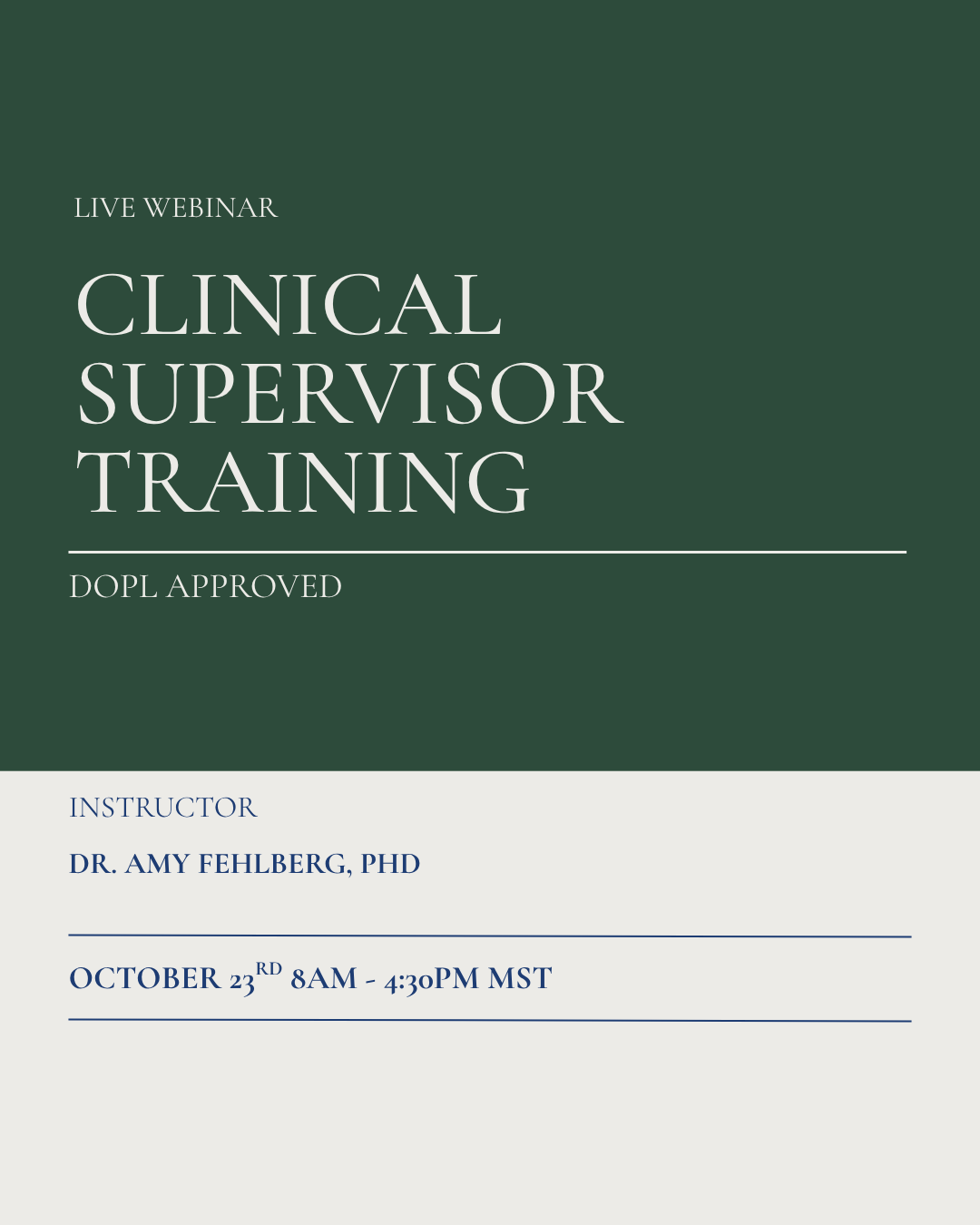
This live, DOPL-approved training gives Utah-licensed clinicians the structured, practical foundation they need to supervise associates with confidence and clinical integrity.
Led by Dr. Amy Fehlberg, this single-session webinar covers the core competencies required for clinical supervision: supervisory relationship and role, ethical and legal responsibilities, evaluation and feedback, and the developmental needs of supervisees at different stages of licensure. Content is grounded in real supervisory scenarios.
Key Outcomes:
Defining and Conceptualizing Clinical Supervision
The Supervisory Relationship and Supervisee Development
Standards of Practice, Ethics, and Legal/Professional Issues
Executive and Administrative Tasks
Upon completion, participants will meet DOPL's clinical supervisor training requirement and receive a certificate of completion.
This training is for you if you:
Are a licensed clinician (LCSW, CMHC, MFT, or Psychologist) in Utah preparing to supervise associate-level clinicians
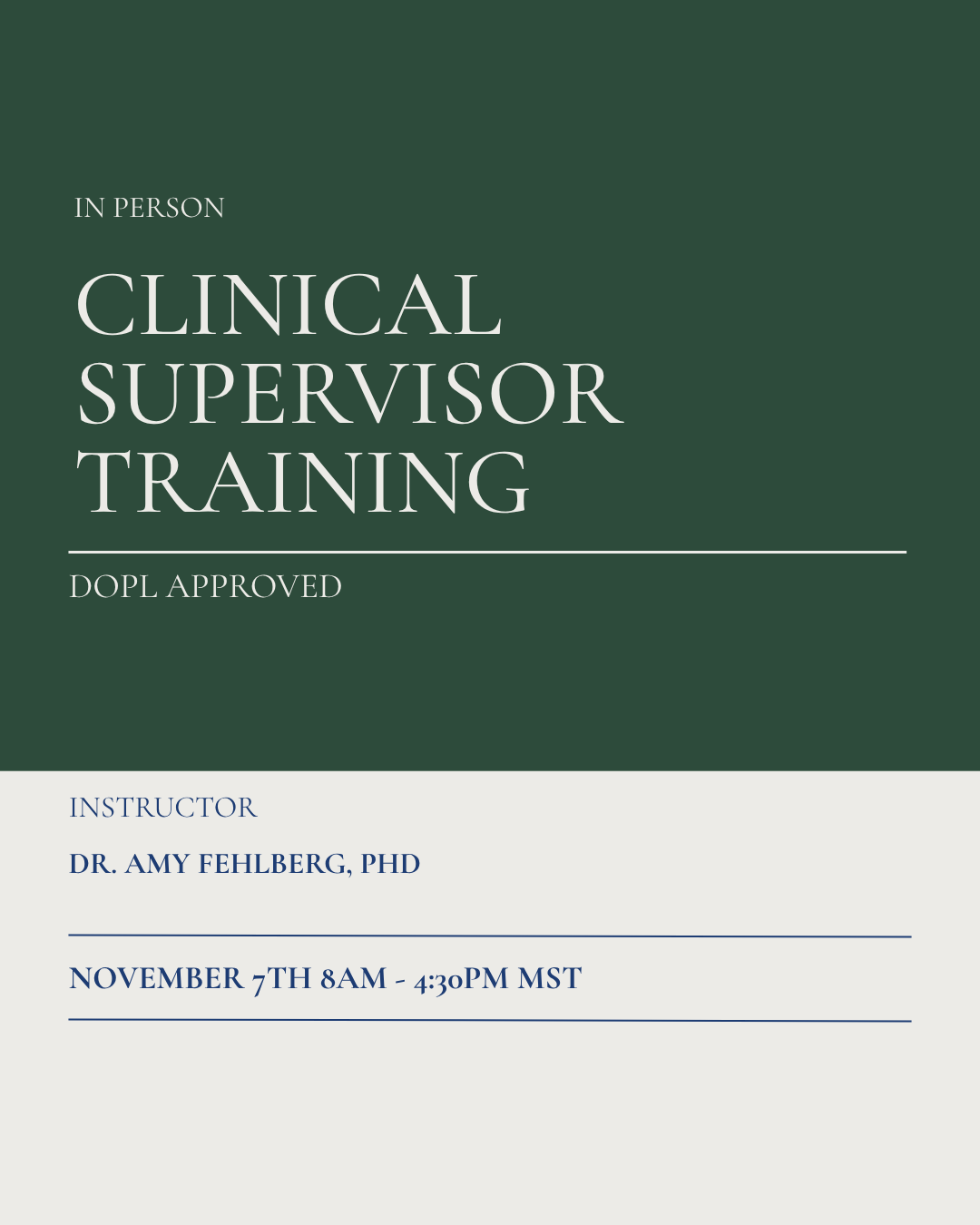
This in person, DOPL-approved training gives Utah-licensed clinicians the structured, practical foundation they need to supervise associates with confidence and clinical integrity.
Led by Dr. Amy Fehlberg, this single-session webinar covers the core competencies required for clinical supervision: supervisory relationship and role, ethical and legal responsibilities, evaluation and feedback, and the developmental needs of supervisee’s at different stages of licensure. Content is grounded in real supervisory scenarios.
When: Saturday November 7th from 8am - 4:30pm MST
Where: 275 E South Temple Suite 345 Salt Lake City, Utah 84111
Key Outcomes:
Defining and Conceptualizing Clinical Supervision
The Supervisory Relationship and Supervisee Development
Standards of Practice, Ethics, and Legal/Professional Issues
Executive and Administrative Tasks
Upon completion, participants will meet DOPL's clinical supervisor training requirement and receive a certificate of completion.
This training is for you if you:
Are a licensed clinician (LCSW, CMHC, MFT, or Psychologist) in Utah preparing to supervise associate-level clinicians
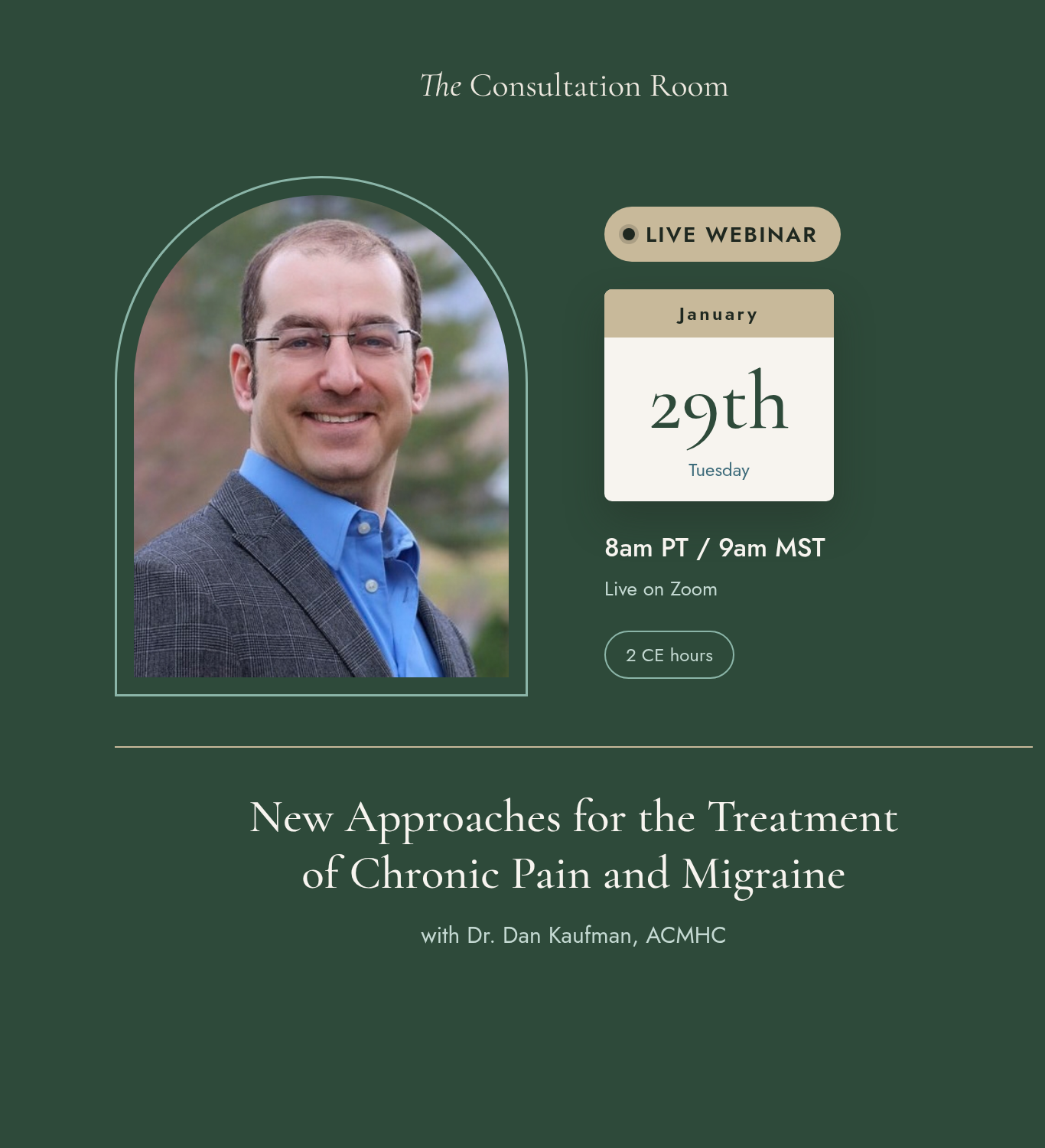
Chronic pain and migraine are highly debilitating conditions that are estimated to affect a large proportion of the world's population. Currently used behavioral interventions for chronic pain having "stress-relieving" properties (e.g. relaxation, mindfulness, biofeedback, CBT) have been highly recommended to better manage pain conditions either as standalone treatments or in combination with pharmacotherapy. However, despite their use, these behavioral interventions are limited and may not provide long-lasting relief.
New approaches for pain treatment including Pain Reprocessing Therapy (PRT) and Emotional Awareness and Expression Therapy (EAET) have gained popularity for their use and effectiveness for chronic pain and migraine treatment.
Participants who work with these conditions are encouraged to attend and learn about these novel and promising treatments.
When
January 29th, 2027 8am PST / 9am mST - 10am PST / 11am MST via Zoom
Key Outcomes
A deeper understanding of the physiological mechanisms of pain and migraine
Expanded knowledge of evidence-based treatment approaches for clients
Real, practical intervention you can bring to your clients in your next session
Meet Your Trainer
Dr. Dan Kaufmann, ACMHC, is a Research Assistant Professor in the University of Utah's Division of Rheumatology. He has a Ph.D. in Medicinal Chemistry and Pharmaceutics, and he started his career designing new drugs for epilepsy and neuropathic pain. That work includes SPD, a patented anticonvulsant and migraine-prevention compound. His research has since moved toward the emotional side of chronic pain: how sex, stress, and affect shape migraine, and how psychological treatments can help people with rheumatic disease. He is now completing training as a Clinical Mental Health Counselor. His recent study found that Emotional Awareness and Expression Therapy (EAET) shows real promise for migraine, and it highlighted the role trauma plays for people with migraine.
What Makes Us Different
We design every course around the question: "How do I use this with my client on Tuesday?"
01 Instruction
Taught by clinicians still practicing
Every instructor in our catalog carries an active caseload. They teach based on this week’s clients and years of applying these methods.
02 Curriculum
Practice-first, not theory-first
Our courses are built around real clinical scenarios — the complexity you face in session. Concepts are introduced through application, so what you learn integrates immediately into how you work.
03 Scope
The full picture of practice
Clinical skill is only part of the picture. We also teach the business and advocacy side — billing, finance, marketing, insurance, leadership, and the systems shaping your work — because a sustainable practice is part of effective care.