
 Image 1 of 1
Most insurance plans cover couples therapy when the right conditions are met. Many clinicians either avoid billing it altogether or bill it in ways that won't hold up in an audit. This guide shows you how to bill couples work accurately and ethically, and how to explain your policies to couples.
You'll learn how to choose an identified client based on clinical assessment, which diagnoses and treatment goals meet medical necessity, and when to use 90847, 90846, or an individual code. It covers whose insurance to bill and why a better plan should never decide that. It also covers what to put in writing before the first claim goes out and how to build a self-pay pathway for couples who don't qualify. A section on tricky scenarios covers situations clinicians run into all the time: the identified client stops attending, coverage lapses, the couple asks to switch plans, or the couple separates.
What's included
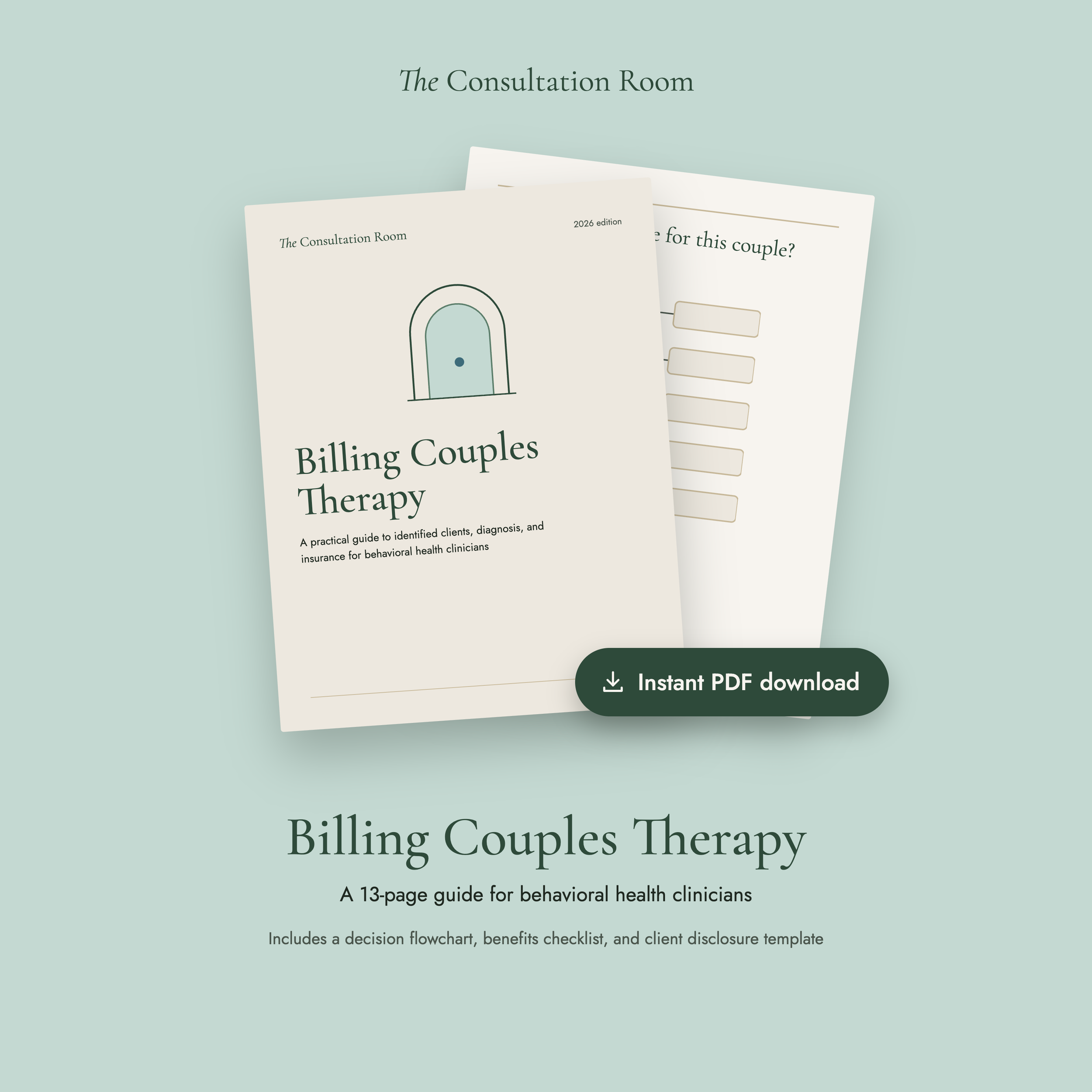
A 13-page guide in seven sections, from medical necessity basics to records and consent
A decision flowchart for intake that answers "Can I bill insurance for this couple?" in five questions
A verification of benefits checklist for couples cases, including the right question to ask the payer
A client disclosure template you can adapt for your own practice
Who it's for
This guide is for therapists, practice owners, and billing staff who see couples and want clear, defensible policies. It's useful whether you're in-network, out-of-network, or deciding whether to accept insurance for couples work at all.
Most insurance plans cover couples therapy when the right conditions are met. Many clinicians either avoid billing it altogether or bill it in ways that won't hold up in an audit. This guide shows you how to bill couples work accurately and ethically, and how to explain your policies to couples.
You'll learn how to choose an identified client based on clinical assessment, which diagnoses and treatment goals meet medical necessity, and when to use 90847, 90846, or an individual code. It covers whose insurance to bill and why a better plan should never decide that. It also covers what to put in writing before the first claim goes out and how to build a self-pay pathway for couples who don't qualify. A section on tricky scenarios covers situations clinicians run into all the time: the identified client stops attending, coverage lapses, the couple asks to switch plans, or the couple separates.
What's included
A 13-page guide in seven sections, from medical necessity basics to records and consent
A decision flowchart for intake that answers "Can I bill insurance for this couple?" in five questions
A verification of benefits checklist for couples cases, including the right question to ask the payer
A client disclosure template you can adapt for your own practice
Who it's for
This guide is for therapists, practice owners, and billing staff who see couples and want clear, defensible policies. It's useful whether you're in-network, out-of-network, or deciding whether to accept insurance for couples work at all.